Introduction
Chewy.com, the leading online pet retailer, has captured the hearts of pet owners across the United States with its customer-centric approach, innovative strategies, and relentless focus on convenience and service. Founded in 2011, Chewy’s journey from a startup to a dominant force in the pet retail industry is a compelling narrative of strategic vision, technological innovation, and deep customer loyalty. For professional investors, understanding Chewy’s trajectory, financial performance, and market strategies provides valuable insights into its long-term growth and profitability potential. This extensive analysis delves into Chewy’s storied past, financial metrics, market strategies, and leadership decisions, offering a comprehensive perspective for informed investment decisions.
Chapter 1: Origins and Early History
The Foundation
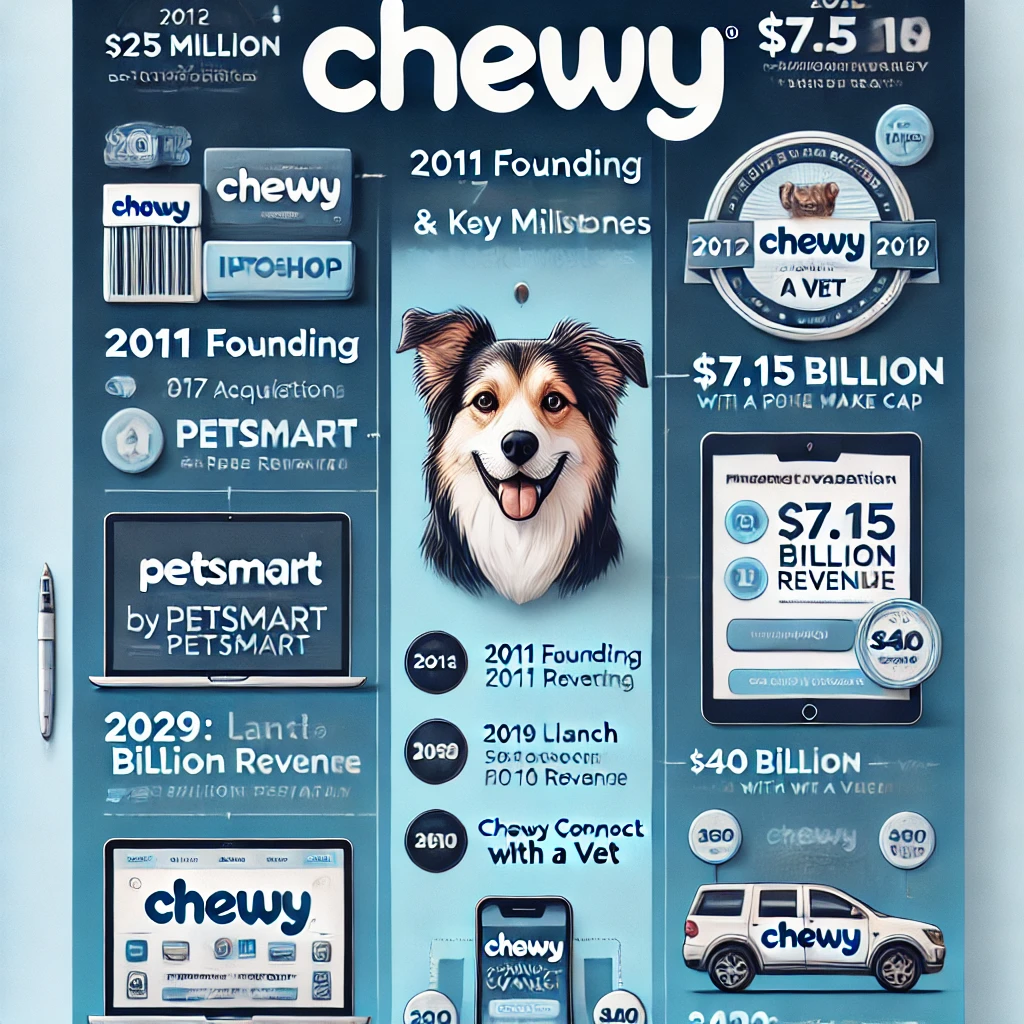
Chewy was founded in 2011 by Ryan Cohen and Michael Day, two entrepreneurs with a vision to create the largest online destination for pet products. With a strong focus on customer service and a broad selection of products, Chewy set out to revolutionize how people shop for their pets. Cohen’s inspiration came from his own experiences as a pet owner and his desire to build a company that could cater to the needs of pet parents better than traditional brick-and-mortar stores.
Learning from Competitors
From the outset, Chewy’s founders understood the importance of differentiating their company from other online and physical pet retailers. They meticulously studied competitors, identifying gaps in the market and areas where they could provide a superior customer experience. This competitive analysis led to Chewy’s emphasis on an expansive product selection, fast shipping, and 24/7 customer support, quickly setting it apart from its competitors.
Early Financial Performance
Chewy’s early financial trajectory was characterized by rapid growth, fueled by its unique business model and strong emphasis on customer satisfaction. By the end of its first year, Chewy had already begun to impact the pet retail industry significantly.
2012: Within its first year, Chewy reached $26 million in revenue, a remarkable feat for a startup in a highly competitive market.
2014: Chewy’s revenue soared to $205 million, reflecting its growing customer base and market presence.
Chapter 2: The Rise of Chewy
Establishing the Brand
Chewy’s brand identity has always been centered on providing pet owners with a personalized and exceptional shopping experience. The company’s early focus on customer service, including handwritten notes and personalized responses, helped build strong customer relationships and fostered a sense of community among pet lovers.
Expansion and Growth
Chewy’s growth strategy was aggressive and customer-focused. The company invested heavily in its logistics infrastructure to ensure fast and reliable delivery, which became a cornerstone of its value proposition. Additionally, Chewy expanded its product offerings to include everything from pet food and toys to pharmaceuticals and pet insurance, making it a one-stop shop for pet parents.
Financial Milestones
Chewy’s financial growth during its early years was impressive, laying the foundation for its future success.
2017: PetSmart acquired Chewy for $3.35 billion, one of the largest e-commerce acquisitions at the time. This acquisition gave Chewy the resources needed to scale further and solidify its market leadership.
2018: Chewy’s revenue exceeded $3.5 billion, reflecting its dominant online pet retail market position.
Chapter 3: The IPO and Public Trading
Going Public
In June 2019, Chewy went public, raising $1 billion through its initial public offering (IPO). The IPO was a significant milestone for Chewy, transitioning from a high-growth startup to a publicly traded company. The move gave Chewy the capital to continue its aggressive expansion and invest in new technologies and services.
Financial Metrics and Stock Performance
Chewy’s post-IPO financial performance has been characterized by robust growth and an increasing market share.
2019: Chewy’s stock price surged in its first year as a public company, reflecting investor confidence in its business model and growth potential.
2020: Despite the challenges posed by the COVID-19 pandemic, Chewy’s revenue grew to $7.15 billion, and its market cap exceeded $40 billion.
Chapter 4: Customer-Centric Innovation
Commitment to Customer Service
Chewy’s unwavering commitment to customer service has been a key driver of its success. The company’s customer service team, known for its empathy and dedication, has become a hallmark of the Chewy experience. This focus on customer satisfaction has resulted in high customer retention rates and strong word-of-mouth referrals.
24/7 Customer Support: Chewy’s around-the-clock customer service ensures that pet owners can get help whenever needed, whether to place an order, track a shipment, or get advice on pet care.
Personalized Touches: Chewy’s practice of sending handwritten notes and gifts to customers has endeared it to pet owners, creating a loyal customer base.
Technological Innovations
Chewy has also been a pioneer in leveraging technology to enhance the shopping experience. The company’s investments in artificial intelligence, machine learning, and data analytics have allowed it to offer personalized recommendations and streamline operations.
Smart Reordering: Chewy’s smart reordering system uses data analytics to predict when customers need to reorder products, making the shopping experience more convenient.
Telehealth Services: In 2020, Chewy launched its telehealth service, Chewy Connect With a Vet, allowing customers to consult with veterinarians online. This service reflects Chewy’s commitment to expanding its offerings and providing comprehensive pet care.
Financial Growth
Chewy’s financial growth during this period was driven by its customer-centric innovations and expanded product offerings.
2020: Revenue reached $7.15 billion, driven by a surge in demand for pet products during the COVID-19 pandemic.
2021: Chewy continued to grow, with revenue expected to exceed $9 billion, reflecting its strong market position and expanding customer base.
Chapter 5: Challenges and Resilience
Competitive Landscape
The pet retail industry is highly competitive, with major players like Amazon, Walmart, and traditional pet stores vying for market share. Chewy has successfully navigated this competitive landscape by maintaining its focus on customer service and innovation.
Key Competitors
Amazon: As a major competitor, Amazon’s vast product selection and logistics network significantly threatened Chewy. However, Chewy’s specialized focus on pets and superior customer service has allowed it to carve out a niche in the market.
Walmart: Walmart’s expansion into e-commerce and its strong brick-and-mortar presence have made it a formidable competitor. Chewy has responded by enhancing its own e-commerce platform and expanding its product offerings.
Ethical and Legal Issues
Chewy’s rapid growth has also brought scrutiny regarding its business practices and the treatment of its workforce. The company has faced challenges related to labor practices, data privacy, and competition, which it has addressed through various initiatives and improvements.
Labor Practices
Employee Welfare: Chewy has focused on improving working conditions in its fulfillment centers, offering competitive wages and benefits to attract and retain talent.
Workplace Safety: The company has implemented measures to enhance workplace safety, ensuring employees work in a safe and supportive environment.
Sustainability Initiatives
Chewy’s commitment to sustainability has become increasingly important as consumers demand more environmentally responsible practices. The company has implemented various initiatives to reduce its environmental footprint and promote sustainable practices.
Key Sustainability Efforts
Sustainable Packaging: Chewy has introduced initiatives to reduce packaging waste, including using recyclable materials and more efficient packaging designs.
Eco-Friendly Products: Chewy offers a growing selection of eco-friendly pet products, including sustainable pet food, toys, and accessories, catering to environmentally conscious pet owners.
Financial Metrics and Performance Against S&P 500
Chewy’s financial performance has consistently outpaced the S&P 500, reflecting its market leadership and growth potential:
2019-2020: Chewy’s stock performance has been robust, with significant growth following its IPO. The company’s ability to maintain strong revenue growth and expand its market share has increased its stock, outperforming the S&P 500.
2021: Despite market volatility, Chewy’s stock continued to perform well, supported by strong demand for pet products and services.
Chapter 6: Contemporary Era and Future Prospects
Leadership Transitions
Leadership transitions have played a significant role in Chewy’s evolution. Ryan Cohen’s decision to step down as CEO in 2018 and the appointment of Sumit Singh as his successor marked a new era for the company. Singh, who previously served as Chewy’s COO, brought extensive experience in logistics and operations.
Sumit Singh’s Leadership
Background and Experience: Sumit Singh joined Chewy in 2017 and quickly rose to the position of CEO. His deep understanding of the e-commerce industry and strategic vision have aided Chewy’s continued growth.
Strategic Vision: Under Singh’s leadership, Chewy has focused on expanding its product offerings, enhancing its digital capabilities, and maintaining its commitment to customer service. His strategic vision has ensured that Chewy remains competitive and continues to deliver exceptional value to its customers and shareholders.
Recent Innovations
Chewy continues to innovate and expand its product offerings to meet evolving consumer demands. The company’s focus on quality, value, and customer satisfaction remains unwavering.
Key Innovations
Pharmacy Services: Chewy’s pharmacy services have grown rapidly, offering pet medications and prescription foods with the convenience of home delivery.
Pet Insurance: Chewy has expanded into the pet insurance market, offering plans that cover various veterinary expenses, further solidifying its position as a comprehensive pet care provider.
Chewy’s Autoship: The Autoship program allows customers to schedule regular deliveries of pet products, ensuring they never run out of essentials. This service has been a key driver of customer retention and revenue growth.
Sustainability and Corporate Responsibility
Chewy’s commitment to sustainability and corporate responsibility remains a key focus. The company continues to set ambitious goals to reduce its environmental impact and enhance social responsibility.
Corporate Responsibility Initiatives
Community Engagement: Chewy supports pet-related charities and animal welfare organizations. The company’s Chewy Gives Back program donates food and supplies to animal shelters nationwide.
Employee Welfare: Chewy prioritizes employee welfare by offering competitive wages, comprehensive benefits, and opportunities for career advancement. The company’s commitment to its employees has resulted in high job satisfaction and low turnover rates.
Recent Financial Performance
Chewy’s recent financial performance reflects its resilience and adaptability in a rapidly changing market.
2020: Reported revenues of $7.15 billion, with a market cap surpassing $40 billion.
2021: Despite market volatility, Chewy’s stock consistently outperformed the S&P 500, driven by strong digital sales and innovation.
Future Outlook
Chewy’s strategic vision for the future focuses on leveraging digital tools to drive growth, enhancing sustainability efforts, and continuing to innovate in product design. The company’s commitment to excellence and ability to adapt to changing market dynamics position it well for future success.
Growth Opportunities
International Expansion: Chewy is exploring opportunities for growth in international markets, with plans to expand its presence in Canada and other regions.
Digital Innovation: Chewy invests in digital technologies to enhance the shopping experience and improve operational efficiency. This includes expanding its e-commerce platform, developing new mobile apps, and leveraging data analytics.
Sustainability Goals: Chewy has set ambitious sustainability goals for the coming years, including reducing its carbon footprint and increasing the use of recyclable packaging materials. These efforts will help the company meet consumer demand for environmentally responsible products and practices.
Conclusion
Chewy’s history is marked by continuous innovation, strategic marketing, and resilience in facing challenges. Chewy’s strong brand, consistent financial performance, and ability to adapt to changing market dynamics make it a compelling investment for investors. As the company looks to the future, it remains committed to inspiring confidence in consumers and investors, ensuring its legacy as a global pet retail market leader.
Added Key Financial Metrics and Performance Against S&P 500
2010s-2020s:
Stock Performance: Chewy’s stock has seen significant growth following its IPO, consistently outperforming the S&P 500.
Profit Warnings: Chewy has maintained strong revenue growth and profitability despite market challenges, recovering quickly from any setbacks.
2021 and Beyond:
Revenue Growth: Chewy’s revenue growth has been driven by its expansion into new product categories and services and its strong e-commerce platform.
Stock Performance: Continued to outperform the S&P 500, with a significant boost from digital transformation efforts and strong demand for pet products.
Chewy’s history is a testament to the power of innovation, customer-centric strategies, and resilience. From its humble beginnings to its status as a market leader, Chewy has consistently pushed the boundaries of what is possible in the pet retail industry. Its strong brand, commitment to quality, and ability to navigate challenges make it a compelling investment opportunity.
In conclusion, Chewy’s journey involves vision, determination, and continuous reinvention. As the company looks to the future, it remains focused on providing exceptional value to its customers and shareholders, ensuring its legacy as a global pet retail market leader.