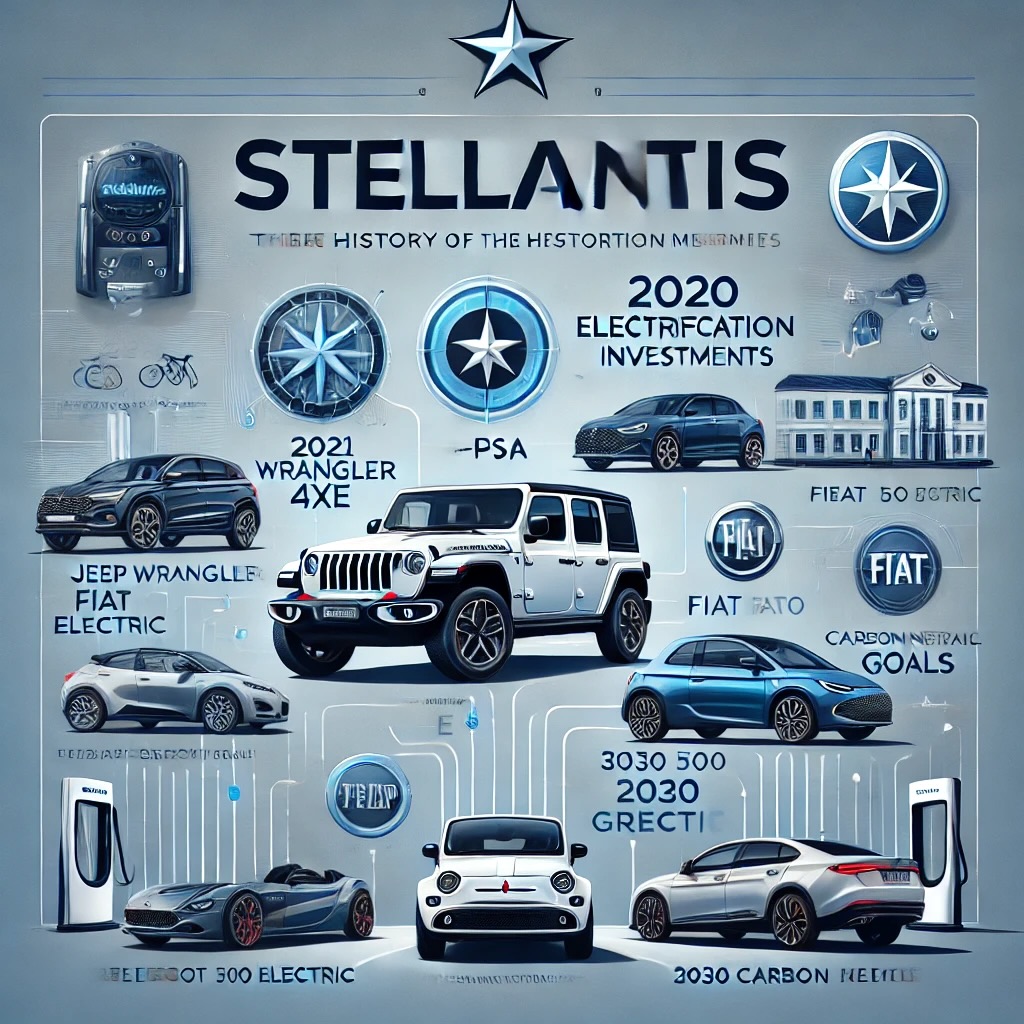
Stellantis: Shaping the Future of Global Mobility
Chapter 1: Introduction
Stellantis N.V., headquartered in Amsterdam, is a multinational automotive giant that emerged from the January 2021 merger of Fiat Chrysler Automobiles (FCA) and Groupe PSA. As the world’s fourth-largest automaker by volume, Stellantis operates across six continents with 14 iconic brands, including Jeep, Dodge, Ram, Fiat, Peugeot, Citroën, and Maserati.
With its name derived from the Latin word “stello,” meaning “to brighten with stars,” Stellantis embodies a vision of innovation, sustainability, and global reach. The company’s strategy focuses on electrification, digital transformation, and autonomous mobility, making it a key player in the automotive industry’s transition toward a cleaner and smarter future.
Chapter 2: Founding and Formation
Fiat Chrysler Automobiles (FCA): A Legacy of Innovation
Fiat Chrysler Automobiles, established in 2014 through the merger of Fiat S.p.A. and Chrysler Group LLC, brought together over a century of automotive history. Key milestones include:
- Fiat’s Early Years: Founded in 1899 in Turin, Italy, Fiat became a leader in affordable vehicles across Europe.
- Chrysler’s Growth: Established in 1925, Chrysler built its reputation on innovation, including the first mass-produced convertible and groundbreaking aerodynamic designs.
Groupe PSA: A French Automotive Powerhouse
- Peugeot: Founded in 1810, initially manufacturing bicycles before transitioning to cars in 1889.
- Citroën: Established in 1919, Citroën became a pioneer in advanced engineering, producing the world’s first mass-market front-wheel-drive car.
The Merger
The merger of FCA and PSA, finalized in January 2021, was a significant strategic move driven by the need to pool resources, innovate faster, and navigate a rapidly changing automotive landscape. Stellantis was created to respond to industry megatrends such as electrification, autonomous driving, and digitalization, setting a clear path for the company’s future.
Chapter 3: Portfolio of Brands
Stellantis oversees 14 brands, each with its distinct identity and heritage:
North American Brands
- Jeep: Known for rugged off-road vehicles and SUVs, Jeep is a symbol of adventure and capability.
- Ram: Specializes in pickup trucks and commercial vehicles.
- Dodge: Focuses on performance-oriented muscle cars.
European Brands
- Peugeot: Combines style and efficiency with a strong focus on electrification.
- Citroën: Renowned for its comfort-focused vehicles and innovative designs.
- Opel/Vauxhall: Offers accessible yet refined vehicles tailored for European markets.
Luxury and Performance
- Maserati: A benchmark for Italian luxury and performance.
- Alfa Romeo: Blends sporty performance with Italian elegance.
Mainstream and Utility
- Fiat: Offers affordable urban mobility solutions.
- Chrysler: Focuses on family-oriented sedans and minivans.
Chapter 4: Global Strategy and Market Presence
Stellantis operates in over 130 countries, with manufacturing plants strategically located in North America, Europe, South America, and Asia. This global market strategy underscores its commitment to expanding its presence and capturing growth opportunities in key regions.
Key Markets
- Europe: Peugeot, Citroën, and Fiat dominate, with electrification leading the charge.
- North America: Jeep, Dodge, and Ram are top sellers, particularly in the SUV and truck segments.
- Emerging Markets: Stellantis is expanding its presence in China, India, and Africa to capture growth opportunities.
Chapter 5: Electrification and Sustainability
Electrification Goals
- 2030: Aim for 70% of vehicle sales in Europe and 40% in the U.S. to be low-emission vehicles.
- Investment: Allocated over €30 billion by 2025 for electrification and software development.
Key Electric Models
- Peugeot e-208: A compact electric hatchback.
- Jeep 4xe: Plug-in hybrid versions of the Wrangler and Compass.
- Fiat 500 Electric: A fully electric version of the iconic city car.
Sustainability Initiatives
- Carbon Neutrality: Targeting carbon neutrality across all operations by 2050.
- Battery Recycling: Establishing partnerships to create a circular economy for EV batteries.
Chapter 6: Innovations in Technology
Autonomous Driving
Stellantis collaborates with Waymo and other partners to develop Level 4 and 5 autonomous driving systems.
Connected Cars
- STLA Platforms: Four modular platforms designed for EVs and connected mobility.
- Over-the-Air Updates: Ensures vehicles stay updated with the latest software.
Chapter 7: Financial Performance
Key Financial Highlights
- 2021 Revenue: €152 billion.
- Operating Margin: 11.8%, one of the highest in the industry.
Regional Contributions
- North America: Contributed 45% of global revenue, driven by Jeep and Ram.
- Europe: Accounted for 40% of revenue, led by Peugeot and Fiat.
Chapter 8: Motorsports Legacy
- Peugeot’s Rally Success: Multiple victories in the World Rally Championship.
- Alfa Romeo’s F1 Heritage: A pioneer in Formula 1 racing.
- Maserati in Endurance Racing: Renowned for its dominance in the 1950s.
Chapter 9: Challenges and Resilience
Post-Merger Integration
Stellantis faces challenges in unifying operations and optimizing brand synergies while preserving individual identities.
Global Supply Chain Issues
Semiconductor shortages have disrupted production, but Stellantis is investing in local sourcing to mitigate risks.
Chapter 10: Future Vision and Strategic Goals
- Electrification: Launching 50+ new EV models by 2030.
- Digital Ecosystem: Expanding services through connected vehicles.
- Global Expansion: Strengthening footholds in China, India, and Africa.
📲 Follow seat11a: